
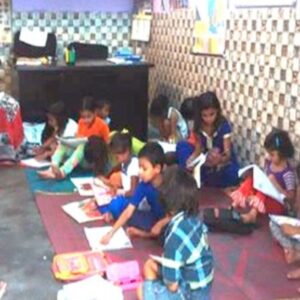
Education has long been regarded as the cornerstone of human development, yet for millions across the world the doors of formal schooling remain only partially open. Poverty, social marginalisation, geographical isolation, and structural inequalities often prevent children, youth, and even adults from fully participating in conventional education systems. In this context, non-formal education emerges not merely as an alternative, but as a powerful and adaptive pathway for learning—one that places the learner, rather than the institution, at the heart of the educational process.
Non-formal education seeks to provide flexible and learner-centric opportunities outside the rigid framework of formal schools. Unlike traditional classrooms bound by standardized curricula and fixed schedules, non-formal education is guided by the realities and rhythms of the learners’ lives. It acknowledges that learning is not confined to school buildings or age-defined classrooms, but can flourish in community spaces, homes, workplaces, and local learning centres. By offering adaptable structures and diverse modes of engagement, it creates avenues for those who have been historically excluded from mainstream education.
At the core of non-formal education lies a philosophy of inclusivity and relevance. The approach emphasizes practical and pictorial-based learning methods that resonate with the lived experiences of learners. Visual tools, storytelling, demonstrations, and hands-on activities transform abstract concepts into accessible knowledge. Such methods are particularly effective for first-generation learners or individuals with limited literacy exposure, as they bridge the gap between theory and everyday reality. Learning, in this sense, becomes not a distant academic exercise but a meaningful process closely connected to daily life.
Equally significant is the adaptability of non-formal education to the diverse needs of its learners. Its target audience is broad and inclusive—children who may have dropped out of school, youth who missed formal educational opportunities, and adults seeking basic literacy or new skills. For many young learners, non-formal education serves as a bridge, enabling them to gradually transition into formal schooling. For adults, it offers empowerment through knowledge, equipping them with the skills needed for livelihoods, civic participation, and informed decision-making.
Moreover, non-formal education recognizes that learning is a lifelong journey rather than a phase confined to childhood. In communities where economic responsibilities begin early and educational interruptions are common, such flexible models allow individuals to learn at their own pace without sacrificing their livelihoods. Evening classes, community-based learning circles, and skill-oriented sessions illustrate how education can be woven seamlessly into everyday life.
Beyond its functional benefits, non-formal education carries a deeper social significance. It nurtures confidence among learners who may have previously perceived education as inaccessible or intimidating. By creating supportive and participatory learning environments, it restores dignity and agency to individuals who have been left at the margins of formal systems.
In an era that increasingly recognizes education as a fundamental human right, non-formal education stands as a vital complement to traditional schooling. It expands the boundaries of who can learn, where learning can occur, and how knowledge can be shared. Ultimately, it reminds us that education, in its truest sense, is not defined by rigid structures but by its capacity to illuminate minds, empower communities, and unlock human potential wherever it resides.